
Emotional Vs Rational Appeals
in Advertising
Final Year Dissertation by Darren Lee Fox (1st Class Grade)
Darren Lee Fox
Advertising and Brand Management Research Report
Module Code: AM50152-6
Submission date: 24th April 2013
Supervisors name: David Heap
Abstract
Given the fast paced world which we live in, it is getting increasingly difficult for Advertisers to capture the audience’s attention. Advertisers must not only capture the target audience, they must also connect with and influence them.
The purpose of this study is to investigate the merits of the two psychological approaches of persuading an audience in Advertising, being; Emotional and Rational Appeals. The study will discuss in detail whether consumers are more receptive to Emotional or Rational Appeals and to dissect what the most effective methods are of not only capturing the audiences attention, but also by persuasion, where the audience responds to a given Advertisement, whether positively or negatively. This study will research into the pitfalls of each type of appeals. The study will also look into one of the most famous Philosophers; Rene Descartes and analyse his view on Rationality and how it compares with world renowned Neuroscientist; Antonio Damasio’s opposed theory.
This report will also question whether Emotional and Rational Appeals can be combined together to form an effective advertisement and if using many different types of emotions in an advertisement will obtain more attention and, ultimately, create more impact.
The final part of the report will feature heavily, the thoughts and processes of consumers. Consumers behaviour is important to understand in the context of purchasing and decision making in order to execute effective Advertising. Consumers have become increasingly savvy, or rational, over the years and are more involved in decision making, which will be discussed in detail, along with other relative questions on consumers, whether they are emotional or rational decision makers.
Introduction
Gaining attention in Advertising is vital for it to work. If Ads do not capture attention, then, the Advertisement is considered a failure. The two core persuasion strategies used in Advertising are ‘Emotional’ and ‘Rational’ Appeals.
There is much on-going debate whether ‘Emotional’ or ‘Rational’ Appeals has more impact on the Audience, which is why Advertisers must learn the merits of both, in order to construct the most effective Advertisement.
For Advertisements to be effective, the creator must stimulate Rational and/or Emotional thinking. Advertising is every bit a science as it is creative and Advertisers do not understand enough of the human mind so they focus too much on gaining attention, rather than the resulting call to action.
The study is most important because it considers both emotional and rational appeals in decision-making and it is surprising how many creatives ignore one or the other. This study relates to each and every consumer in many ways because, behind this study is the human brain, which, although incredibly unique to each individual, is built the same way.
The Rational vs Emotional appeals are linked to the separation of the human brain and the complex functions of the neurals being stimulated. Humans would simply not be empathetic, normal, functioning human beings without a significant ‘Emotional’ and ‘Rational’ working brain. It is what makes us human and not one aspect can be ignored when communicating to people, whether in our day to day lives, or through Advertising.
To find out whether ‘Rational’ or ‘Emotional’ Appeals are more affective, the study will be based on 4 key texts, which will focus on 3 key themes and issues. The first theme shall focus on ‘Emotional’ Appeals and discuss the merits of using ‘Emotional’ Appeals in Advertising. The second key theme shall be based around ‘Rationality’ and how that relates to consumer behaviour in Advertising, which also asks can the two be successfully combined together in Advertising, The 3rd and final key theme shall discuss the theory of famous Philosopher; Rene Descartes and compare how his theory of rationality differs to well respected Neuroscientist Antonio Damasio.
These key themes and issues will be documented purely from Secondary Research, mainly from textbooks because they provide much more depth and are more credible than Web based sources. The Web is saturated with so much ‘unofficial’ information from just about anybody, which is why it has been used minimally.
Upon completion of the Literature Review, any key questions will be highlighted that the study has cropped up, questions, which were not answered in any Literature, studied. The questions will be answered by conducting Primary Research in the form of Surveys (Quantitative research) and also Interviews (Qualitative research). It is important to get the balance right between volume and quality of the research to achieve a concrete answer, which is why a mixture of Quantitative and Qualitative research has been adopted. A conclusion will then be formed on what has been found from the study and to identify if the initials aims have been met.
Aims and Objectives
The aims of this study are to investigate the merits of Rational and Emotional Appeals in Advertising and to answer the following questions:
- Emotional or Rational Appeals – which is most influential in Advertising and which one are consumers more receptive to?
- Can Emotional and Rational Appeals be combined successfully in an Advertisement?
What form of emotion are people most susceptible to in Advertising?
- As consumers age, do they become more Rational in their decision-making? Are the younger generation more Emotional in their decision-making?
- Does the price of the product effect or influence the use of using Rational and Emotional appeals during the purchase decision?
- Do consumers have time to be rational when deconstructing an Advertisement?
- How do Descartes’ and Damasios theories compare to each other?
Themes and Issues – Emotional Appeals
In order for Advertisements to connect with the audience, Emotional Appeals are incredibly powerful. (Manning, Reece, 2007, p201) argue that:
“To inspire people and move them in the right direction, you have to engage them emotionally”.
Emotional Appeals can be inspiring. It can be pleasant and exciting, but it can also be unpleasant, as Fig 1 shows.
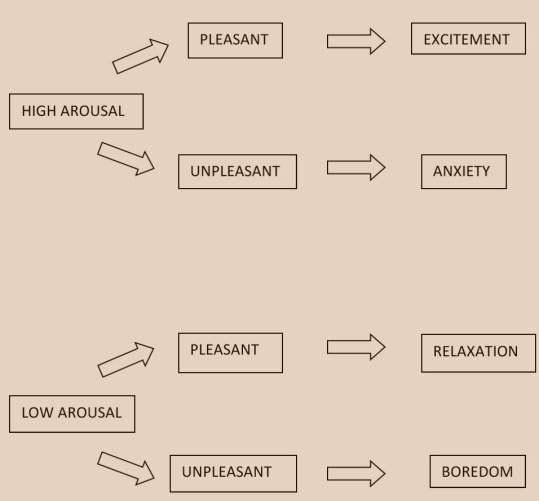
Fig 1 – Effects of High and Low Arousal (O’ Shaughnessy, 2004)
“Anxiety and boredom create emotional tension: In anxiety because the arousal is too high and in boredom because it is too low. In an anxiety-avoidance mental mode, we seek to avoid anxiety and to experience relaxation. In an excitement-seeking mental mode, we seek excitement to avoid boredom” (O’ Shaughnessy. J, O’Shaughnessy. N.J, 2004, p95).
It is important to remember that such emotional states, as in Fig 1, can change rapidly, especially when people are highly aroused (O’ Shaughnessy. J, O’Shaughnessy. N.J, 2004).
Philosopher Gilbert Rylers gave us his description, rather than an interpretation of what emotion is:
“Emotions are described as turbulences in the stream of consciousness, the owner of which cannot help registering them” (Du Plessis, 2008, p84). Rylers definition of emotions seems to generalise emotions as extreme in the sense that emotions are turbulent. However, not all emotions are turbulent or extreme. There are many definitions of what emotion is, whilst some analysts describe emotion as a push or pull feeling, which is consistent with Wundt’s pleasure and pain (Du Plessis, 2008).
Emotional Appeals can be a very sensitive and personal ploy of communicating with certain individuals. It is important to state that Advertisers cannot possibly know the background of the audience and their life events and personal experiences and it is impossible to please everybody with the same emotion. Using emotional appeals will ideally trigger a positive reaction from the Audience, but it can also very easily trigger a negative response because such Emotional Appeals may dig up emotionally grounded experiences that certain individuals may wish to forget, thus, not paying attention to the Ad, or even worse, avoiding the brand altogether (O’ Shaughnessy. J, O’Shaughnessy. N.J, 2004).
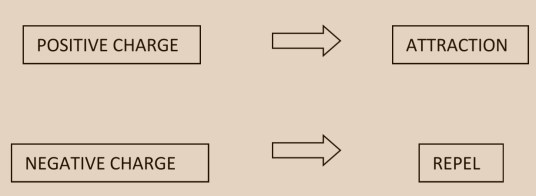
Fig 2. Positive and Negative Charge Effects (O’ Shaughnessy. J, O’Shaughnessy. N.J, 2004).
If the stimulus reaching the brain is emotionally charged, an immediate reaction of like/dislike follows. Therefore, emotion must work quickly and simply (O’ Shaughnessy. J, O’Shaughnessy. N.J, 2004). Stimulus rarely contains neutral perceptions, because we all subconsciously have an opinion and perception on what is being fed to us (O’ Shaughnessy. J, O’Shaughnessy. N.J, 2004).. Furthermore, a somewhat rash decision may arise through a reflex of the brain, that our rational thinking will not have time to counteract the lightening quick subconscious reaction so a decision will automatically be made (O’ Shaughnessy. J, O’Shaughnessy. N.J, 2004).
Emotion is sometimes very turbulent, that it can often disrupt our rational thinking and cloud our vision. It can also work the other way too, where Rational thinking can often ‘spoil the moment’ in what we are experiencing (Damasio, A. R, 2000).
One of the most effective forms of emotion in Advertising is Humour. It is one of the most effective methods of gaining the audience’s attention. It can even be used as a distraction tool to disarm criticism (O’ Shaughnessy. J, O’Shaughnessy. N.J, 2004). However, Du Plessis (2008) argues that humour can be a double edged sword and, what may be understood by one culture may not be understood by another, whilst humour can often offend those who the Ad does not seek to target specifically (O’ Shaughnessy. J, O’Shaughnessy. N.J, 2004). Furthermore, whilst humour is one of the most effective methods of gaining attention, humour has much less impact on purchasing behaviour argues Armstrong, because it throws you off from what the Advertisement is trying to get the Audience to do (Armstrong, 2010).
O’ Shaughnessy supports Armstrong’s view because Advertisers get fixated on capturing the Audience’s attention with the use of humour, that the actual persuasive content or message is not considered, thus, the Advertisement is purely built around humour (O’ Shaughnessy. J, O’Shaughnessy. N.J, 2004). Even if there is a persuasive message or call to action present in the Advertisement, Armstrong states that the use of humour can distract the audience from the actual message because:
“The humour overwhelms the message” (Armstrong, 2010, p230).
Some Advertising experts have been even more critical of the use of humour, stating that:
“People do not buy from clowns” (Armstrong, 2010, p230).
As consumers grow older, they become more experienced in life and more resistant to emotional ploys and they know more what they want. Du Plessis argues that:
“Emotion is likely to be an older ability of man than rationality in the process of living and surviving today” Du Plessis (2008, p201).
Du Plessis suggests that, as consumers grow older, they become more resistant to manipulation because they already have been faced with persuasion many more times than younger consumers that they are not as easily persuaded and actually identify persuasion as manipulation, whereas younger consumers experience emotional appeals as pleasure, or indeed pain. O’ Shaughnessy backs this theory up by suggesting that as a person ages, his or hers repertoire of items classified as good or bad grows, thus, anything connected with those good or bad items are thought as good or bad and have stronger thoughts about all areas of life (O’ Shaughnessy. J, O’Shaughnessy. N.J, 2004).
It cannot be denied that Emotion plays a huge part in Decision-making and, as Du Plessis (2008) suggests, emotions cause decision-making and also help determine the final decision.
As the debate goes on between the values of Rational versus Emotional appeals, it is worth asking ourselves, can Emotional and Rational Appeals be used simultaneously in an Advertisement? Clearly, they are both extremely vital in their own merits so would it not be smarter and indeed more effective if both Emotional and Rational Appeals were present? Well, according to Armstrong (Armstrong, 2010) the answer is an absolute NO! They simply would interfere with each other, as Fig 3 shows (Armstrong, 2010)
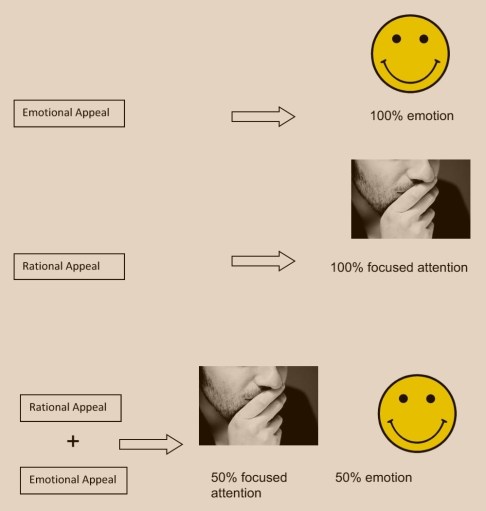
Fig 3 – Mixing Rational and Emotional Appeals (Armstrong, 2010)
Fig.3 shows that when you mix Rational and Emotional appeals, then you cannot 100% enjoy the emotional content because part of your brain is distracted and thinking rationally. Likewise, you are unable to think 100% rationally when your brain is distracted emotionally. Advertisers must choose one or the other. Many Advertising experts, however, suggest that an emotional element would strengthen most Advertisements, despite evidence against this belief (Armstrong, 2010).
Armstrong makes a beautiful analogy of why you should refrain from combining both rational and emotional appeals in an Advertisement:
“Imagine that you and your sweetheart are watching a glorious sunset. Now consider how the mood would change if you explained the combination of atmospheric conditions and dust that produced the sunset” (Armstrong, 2010, p 85, 86).
Armstrong’s view is that Rationality can spoil pleasurable emotional experiences, whilst emotions can cloud rational thinking and this is identical to what Damasio suggests as previously discussed, where rationality can ‘spoil the moment’ (Damasio. A, 2010). Du Plessis also makes a valid point, in that:
“Confusion is the biggest danger” (Du Plessis, 2008, 159).
He goes on to argue that the audience will just ignore anything they do not understand and will make no effort in translating an Advertisement, even if they are only slightly confused (Du Plessis, 2008). Du Plessis also states that:
“It (confusion) is the most common mistake creatives make in designing Advertisements (Du Plessis, 2008, 153).
Themes and Issues – Rational Appeals
Advertisers recognise that today’s consumer is ever more savvy, and as Du Plessis (2008, p31) argues:
“One role for advertisers is to place information in the path of those who are actively looking for it”.
Advertising is the main source of knowledge of a given product for consumers. Ironically, almost all non-incidental learning and exposure to Advertisements is done incidentally or situational, as Fig 4 illustrates (De Plessis, 2008)
We force our attention onto something Our attention is directed involuntarily, or at least less consciously
Fig 4 Conscious vs Incidental Learning – Du Plessis, 2008 (p95)

Even in spite of lack of knowledge about a particular brand or product being advertised, we all have thoughts and opinions on what we are being subjected to, as De Plessis, 2008 (p170) put it:
“Your mind is not a blank at the start of the reasoning process”.
In fact, according to O’Shaughnessy, when a conscious choice has to be made, consumers often focus on what is negative and filter those negative alternatives out because it is what comes most vividly to them, whilst negative information about a brand influences the consumers decision more so than positive information about a particular brand (O’ Shaughnessy. J, O’Shaughnessy. N.J, 2004).
It has to be considered, how does price affect consumers rational thinking? Is there more leeway in the decision making process if the consumer is making a low involvement purchase?
According to Du Plessis, there is simply little or no rational thought where low involvement purchasing situations occur, especially when the product is a habitual purchase, perhaps a toothpaste or toilet paper (De Plessis, 2008). It can even be an unnecessary stressful event, looking for alternative offerings for low priced items when there is nothing wrong with that toothpaste you use, or the shampoo you regular use. Why change? Why waste Cognitive energy? (De Plessis, 2008). Fig 5 describes Du Plessis’ theory of a habitual or low involvement purchase:
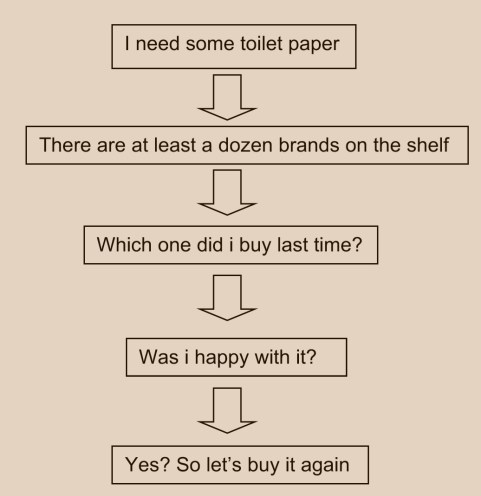
Fig 5: Du Plessis theory (Du Plessis, 2008, p195)
There is also an alternative theory, one which Damasio and Joseph Le Doux suggest, shown below in Fig 6.

Fig 6: Damasio and Le Doux theory, (Du Plessis, 2008, p195)
The difference between the two, argues Du Plessis, is that the second theory travels directly to an emotive consideration, whereas the first one (fig 5) contains two memory steps; ‘which one did i buy last time?’ and ‘was i happy with it’?.
Du Plessis concludes that the second theory is more in line with how the brain really works because:
“the emotion of liking the brand is more readily available to the brain than are the rational considerations which arguably generated that emotion in the first place” (Du Plessis, 2008, p196)
Competition between Advertisements is so fierce, that it is common practice to toy with what is known as ‘Puffery Advertising’, where the consumer is led to believe that they will gain more value or enjoyment of the product or service that is being Advertised. Whether it be a Restaurant claiming to serve ‘the best food in town’, Bayer’s claim of ‘the world’s best aspirin’ or Hush Puppies claim of ‘the earths most comfortable shoes’ (Armstrong. J, 2010).
Puffery Advertising is not illegal since there is no way of proving the claims by the Advertiser to be false, or indeed true. It is another term for ‘exaggeration’ argues Myers (2013). In the late 1990’s, Pizza Hut sued Papa Johns for claiming ‘better ingredients, better pizza’, which went to the U.S. Supreme Court, but failed to overturn their claim. (Armstrong. J, 2010). Advertisers often tread a fine line in what is acceptable and what is pure lies and manipulation in a bid to persuade the audience in rational terms. O’ Shaughnessy suggests that all many ads achieve is little more than Puffery, making them less credible (O’ Shaughnessy. J, O’Shaughnessy. N.J, 2004).
It is O’ Shaughnessy who describes beautifully on why consumers rely on what information is put in front of them to help them make a rational decision:
“the consumer buys not just a product per se, but a product under a description. How a product comes across in that description determines how it is envisaged and how attractive a buy it is likely to be” (O’Shaughnessy. J, O’Shaughnessy. N. J, 2004, p5).
Armstrong suggests that consumers are most likely to be persuaded when the benefits of a certain product are clear and that they can be displayed as either Rational or Emotional (Armstrong, 2010). What Armstrong is saying is if the benefits are significant, then they must shine through the Advertisement. In addition to this, consumers who have a set criteria of wants and needs will seek out those wants and needs, which just highlights the importance of demonstrating such product benefits in an Advertisement in a clear and effective way (Belch. G, Belch. M, 2009)
It must be considered in this fast past world, the essence of time and how much the Audience has to spare when being immersed in the world of Advertising. Werner Kroeber-Riel of the University of Saarland has studied much work on ‘eye scanning’ and concluded that the average reader spends a mere 2 seconds viewing a print Advertisement, although this varies slightly with each size of each print, as Fig. 7 shows us:
| Average percentage looking at Advertisement | Average reading time | |
| 3/4 page and larger | 89% | 5.0 sec |
| 1/2 page to 3/4 page | 67% | 2.4 sec |
| 1/4 page to 1/2 page | 52% | 2.1 sec |
| Smaller than 1/4 page | 47% | 1.5 sec |
| Average | 2.8 sec |
Fig 7: Average audience and reading time for print advertising. (Du Plessis, 2008, p128)
It begs the question, if consumers only spend 2 seconds ‘scanning’ an Advertisement, then, does this have an effect on how Rationality in Advertisements is used? Do consumers have time to be Rational?
According to Du Plessis, the more words contained in an Advertisement, the consumer does not extend his or her reading time to read all of the text, which you can see below in Fig 8 (Du Plessis, 2008). Furthermore, a researcher by the name of Laufer came to the conclusion that, the more words in an Advertisement, the less that the Ad was recalled in the Audiences memory (see Fig 8). Du Plessis concluded that:
“so the message is that viewers do not give attention to advertisements with a lot of words, perhaps because these tend to be advertisements that fail to make an emotional impact” (Du Plessis, 2008, p128, 129).
What Du Plessis concludes, is Advertisements that fail to make an emotional impact, or indeed lack emotional content, are less recalled than Advertisements that do contain effective emotional content.
| Recognition | Recall | |
| Advertisements with little or no text | 100 | 100 |
| Text up to 1/3 of space | 86 | 82 |
| Text 1/3 to 1/2 of space | 77 | 73 |
| Text 1/2 to entire space | 60 | 61 |
Fig 8: Recognition of and recall of text-oriented advertisements (Du Plessis, 2008, p128)
There are many products and services which are mainly designed for a more Rational decision, which is known in Marketing as ‘Telic Mode’. When in a Telic Mode, the consumer focuses on the objective in hand, to get the best value for money and/or to seek efficiency, whilst filtering out anything that is fuelled with negative emotions such as anxiety, uncertainty or fears (O’ Shaughnessy. J, O’Shaughnessy. N.J, 2004).
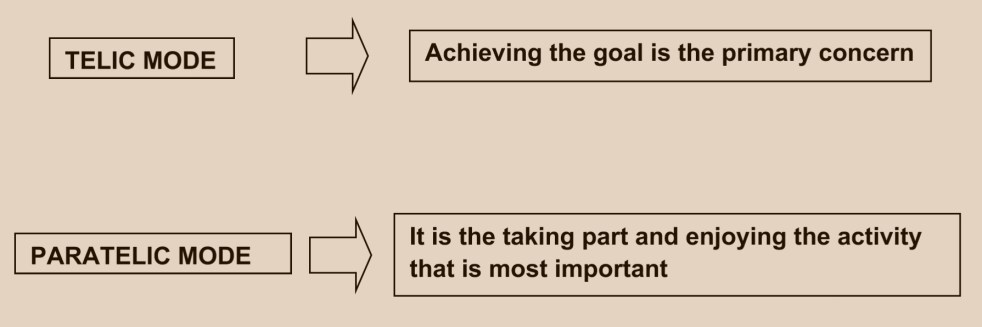
Fig 9: Telic Mode vs Paratelic mode (O’Shaughnessy. J, O’Shaughnessy. N.J, 2004, p95).
Paratelic Mode simply means the opposite of Telic Mode, where the enjoyment of the product or service is most important, with a much less amount of Rationality, or little or no Telic Mode being present. Each place of work must act accordingly as to which of the two modes their customers will likely be in. Walk in a Pharmacy for instance and the Pharmacists will be completely in a Telic Mode, as will the customers, because the nature of the business is that the customer has a specific problem that needs addressing (O’ Shaughnessy. J, O’Shaughnessy. N.J, 2004). In contrast to this, Disneyland Paris will attract the ‘Paratelic Mode’, where the objective is to entertain consumers, since they are there for pleasure. (O’ Shaughnessy. J, O’Shaughnessy. N.J, 2004).
Themes and Issues – Descartes vs Demasio
‘I think therefore i am’, perhaps the most influential quote in the history of Philosophy (Damasio, 2000) comes from French Philosopher; Rene Descartes. However influential his words may have been during the 1600’s and beyond, his take on the world and his black and white thinking was only challenged during the last two Centuries.
Fig 9: How the emotional and the rational relate to each other – Descartes and Damasios views, (Du Plessis, 2008, p92)

So what does Descartes mean in ‘i think therefore i am’?
Well respected Neuroscientist; Antonio Damasio takes a stern view against Descartes theory:
“the statement illustrates precisely the opposite of what i believe to be true about the origins of mind and about the relation between mind and body. It suggests that thinking and awareness of thinking, are the real substrates of being” (A. Damasio, 2000, p248).
Du Plessis, on the other hand, puts it more simply:
“it is the separation of the emotional from the rational” (Du Plessis, 2008, p 91)
If we go back to what Du Plessis says “Emotions are described as turbulences in the stream of consciousness” (Du Plessis, 2008, p84), then this supports Descartes theory to a degree because Du Plessis suggests that emotions are peaks and troughs amongst a conscious mind, being short lived, therefore cannot be generalised as ones permanent mental state, but they should be considered, which Damasio strongly suggests.
Whilst there is much debate on emotional versus rational thinking and which one is more influential, Damasio has no doubt that one does affect the other at a significant level. It is simply extremely difficult to make rational decisions when experiencing a moment of anger or even lust (Damasio, 2000).
It is interesting to point out one theory, which Descartes suggests, in that, what separates us human beings from animals is the control of animal instinct by rationalisation, of which Damasio himself agrees with (Damasio, 2000). The main difference between Descartes and Damasios theory is that Descartes sees Rationality as King regardless of emotion, whereas Damasios theory suggests that they are both strongly linked together:
“because the brain is the body’s captive audience, feelings are winners among equals and since what comes first constitutes a frame of reference for what comes after, feelings have a say on how the rest of the brain and cognition go about their business. Their influence is immense” (Damasio, 2000, p 159, 160).
Interestingly, Damasio himself, goes on to state that rational thought alone will achieve the best solution possible to a given problem, so long as emotion is kept at bay (Damasio, 2000). This particular view on rationality does give Descartes a lot of credit in the sense of highlighting the importance of rationality, of which Descartes purely based his theory around. Again, the problem is however, the fact that Emotion was not even considered in Descartes theory. Furthermore, Philosopher Ronald De Sousa has argued that:
“emotions are inherently rational”, whilst Johnson-Laird and Keith Oatley suggest that “basic emotions help manage actions in a rational way” (Damasio, 2000, p201).
Du Plessis agrees very much with this take and puts it simply:
“emotion not only shapes our unconscious reactions; it also feeds into, shapes and controls our conscious thought” (Du Plessis, 2008, p106).
Evidence supporting Damasio’s and Du Plessis’ theory, amongst others, is in abundance. According to neurologists who have studied the structure of the brain state that:
“our instinctive and emotional reactions and our higher thought processes are deeply and inextricably linked to each other. What is more, our instinctive emotional reactions come first, and they appear to play a major part in determining what we pay attention to, and in shaping out conscious thought processes” (Du Plessis, 2008, p106).
Du Plessis interprets Damasios theory as trying to rationalise emotions. In simple terms: “how will i feel if i do that”? (Du Plessis, 2008, p 88). Du Plessis goes on to say that any given person cannot know how they will feel in the future, so we are likely to use past experiences to help predict the likely feeling or emotion (Du Plessis, 2008, p 88).
Golemans summary of Damasios take was similar “It (the mind) weighs the emotional bottom line from those previous experiences and delivers the answer to us in a hunch, a gut feeling” (O’ Shaughnessy, J, O’Shaughnessy. N.J 2004, p124)
Research Methods
Upon completion of the literature review, there are several key questions that have been generated from the literature itself, that have not been answered in any literature I have studied. The primary research will consist of both Quantitative and Qualitative because I want to form my conclusion from each angle. Quantitative Research will be achieved by conducting surveys which will focus more on volume, but allowing the recipient to provide a descriptive answer.
There are several pros and cons of each research method. One of the main advantages of conducting a survey is the convenience and also the ability to compare such a volume of answers from as many people as you require, if they are willing to complete a given survey, Bell, J, (2010).
In contrast, Oliver, P (2010) believes that such research, being surveys and questionnaires, limit the amount of quality of it because surveys are somewhat ‘robotic’ by nature and that the recipient is not able to express themselves properly. With this in mind, interviews will be conducted of the general public, where the recipient is able to express themselves fully and the interviewer has the opportunity of asking sub questions that may pop up from a previous answer, almost like an informal chat, Oliver, P (2010).
Bell, J (2010) also supports the use of Interviews because they are more adaptable, whereas Questionnaires and even surveys are taken at face value.
In order to keep each participants attention and commitment levels high when conducting the surveys, the total number of questions have been narrowed down to a total of nine in order to encourage a more in depth answer, rather than having a daunting looking long list of questions that the recipient just wants to whiz though. In that respect, the survey has been minimized because recipients are more likely to give more in depth answers if there are fewer questions. The Interviews will take the same approach, with even fewer questions in order to encourage a more in-depth answer, which will support the findings from the survey. The Interviews will focus on the ‘deeper’ questions that require a more in-depth answer from because relying on the survey alone is less concrete.
Ethical Considerations are extremely important when conducting Primary Research. The Primary research will involve people only and it was made clear to each and every person the nature of the study and obtained written consent from each survey issued, whilst also explaining they have every right not to answer any question that they do not feel comfortable with for any reason and that the data they supply will not be identified as theirs, as suggested firmly by Oliver, P (2010).
Case Study
The case study will explore questions that have been formed from the literature review that require answering. For this research, 20 people have been surveyed and 8 interviewed, with a mixed demographic and sexes.
CASE STUDY QUESTION 1a
The first discussion is purely about the audience and how obtainable they are through Advertising. The question was left very open and nonspecific to them in order to see their immediate thoughts, almost like an overview question.
1a. How could Advertising best connect with you? What makes you tick?
There seems to be a broad answer to this question, in that consumers are ‘grabbed’ in different ways. What is most confusing for Advertisers is the dilemma between ‘attention gaining’ and also ‘call to action’. Consumers, however, do seem to connect with humour greatly, thus enjoying the Advertisement. It seems that Advertisements that are entertaining is what grabs the audience’s attention most of all:
“any advertisement that makes me laugh is a winner in my eyes” (person 6, survey 6).
This response does seem somewhat of a generalisation that if any Advertisement makes the consumer laugh, then the Advertisement is a success. Person 6, amongst, many creative, mistakenly think that Advertisements that are successful in gaining attention are successful Advertisements, which is far from the truth, as already discussed in this report.
In contrast, many consumers look for proof that the product will be beneficial to them and not just Puffery lies, which shows how consumers have become more educated:
“I think any advertisements that could show some benefit towards myself or my family would be the most likely thing” (person 19, survey 19).
It also seems that there is a need for tangible proof that the product will be beneficial to consumers because they want to be able: “to try out the product” (person 10, survey 10).
One other key point from the research was that some of the people surveyed stated how they prefer visuals as opposed to text. One person even stated how she preferred visuals to a strong rational argument on why you should buy this product:
“Visual. I don’t like statistics such as a 9 out of 10 readers would recommend this” (person 12, survey 12).
That is quite a statement from person 12, who is rejecting such a powerful argument from a given advert.
CASE STUDY QUESTION 1b
Whilst the first question focuses on ‘attention gaining’, the second question focuses on ‘call to action’.
1b. Have you ever been persuaded by an Advertisement where you were inspired or considered to buy something what you normally would not have considered buying before seeing the Ad?
The response from this question was most interesting because the overwhelming majority of respondents stated either that they had not been persuaded by an Advertisement to a point of buying a previously unconsidered, or that they had been persuaded by the product itself and not the actual Advertisement. For example, (person 8, survey 8) simply was persuaded to purchase the new KFC Krushems. Similarly, (person 4, survey 4) revealed:
“hair colour because I liked the shade the model was wearing”.
There seems to be little recall of Advertising per se, but only of products. This can be tied to rationality and the sense of remembering and judging what is on offer and not the actual Advertisement. It also seems that novelty entices consumers greatly. So much so, that they are willing to try new products, albeit, low involvement items:
“Yes. This sounds really weird but, do you know those chocolate eggs that over Easter, looked like real eggs? I don’t even like chocolate but because on the advert, it was like a novelty. A lot of people were the same because they were sold everywhere. I think it was the novelty” (person 27, interview 7).
It seems like food items are high on the agenda of novelty. Food, after all, is a need of man, whereas, a watch is not for instance. Consumers seem more willing to experiment with food products and are persuaded by food Advertisements more so than any other items:
“Yes, probably yes. Food generally” (person 28, interview 8).
Again, person 28 does not recall Advertisements that the person was seduced by, but, the product that was being advertised. The product alone has to have considerable pulling power in order to persuade, regardless of how clever the Advertisement is.
Interestingly, there were several comments made in the surveys about having low levels of trust in a given Advertisement:
“no because you can’t trust what you can’t see” (person 14, survey 14)”
Person 14 is saying what O’ Shaughnessy suggested, in that consumers filter out negative information, or filter out any bad feeling, or uncertainty about a proposition.
A great passage comes from person 18, whose experience demonstrates how dominant rationality can be:
“I really wanted an Audi A3 because of the advert that showed a bull as a metaphor for the car. I didn’t buy one though” (person 18, survey 18).
Person 18 clearly liked the Advertisement and was persuaded to a point of consideration, but then, rationality prevailed. It is important to note that this was a high involvement purchase decision, because, as discussed in the Literature, high involvement products feature much more rationality in decision-making. Person 18 demonstrates Damasios credibility and the fact that emotion and rational thoughts do ‘talk to each other’ so to speak.
It seems that Advertisements have less power to persuade a person to purchase something that was previously unconsidered, especially high involvement products, but they do have power in swaying an audience if the product being Advertised is already on the agenda of the consumer (person 22, interview 2).
Consumers seem to know what they want and the feedback from the primary research just highlights the importance of knowing your target market and advertising a product that will most likely be favoured by them:
“Not really because I usually have my mind set on something anyway. I wouldn’t say Advertising has a major influence (person 24, interview 4)”
There was just two respondents that pointed to any form of seduction through Advertising:
“Yes. Sometimes when there is somebody influential on TV then yes you can be quite influenced” (person 23, interview 3).
And:
“Yes. The Seiko Sportura Watch, Advertised by Barcelona FC. Massively inspired by the Barcelona Aspect.” (person 25, interview 5).
Both answers here are consistent in that they represent a part of that person, where they look up to a Celebrity or Football Team and they, themselves, like to be associated with that power.
CASE STUDY QUESTION 2a
The next two questions were generated from Descartes vs Damasios theory, whose contrast in views of emotion and rationality have brought up great debate in how humans function. The question basically asks whether emotion or rationality is more dominant in purchasing.
2a. Would you say you are more rational or emotional in purchasing?
From the feedback, it seems as though most consumers are rational in purchasing, largely due to financial restrictions:
“(female) rational. I like to save my money. So I research into things to try get things the cheapest. If I need something I will buy it and try and get the cheapest, but some things, I think, I could do with it, I probably would buy it but get the cheapest because I like to save my money” (person 21, interview 1).
Rationality seems to be more dominant in consumers purchasing habits, that it often has the final say, even when emotion is strong, consumers often try to fight off emotional wants:
“I am careful with money, so if I see something I want, rather than need, i test myself by not buying it. Then I see how much I think about it over the next couple of days. If I keep thinking about it, I will go back and buy it. Usually purchases are made on a rational basis though” (person 18, survey 18)
Consumers do not just make decisions based on the price of the product, but also on whether the product will benefit the user:
“I believe I am more rational. I tend to think ‘will I benefit or not’?” (person 19, survey 19)
Emotion still remains a very influential decision making factor. A great analogy comes from person 7:
“emotional definitely. If I like something I’ll need it” (person 7, survey 7)
Person 7 is saying how powerful ‘wants’ are, almost like a craving in order to satisfy oneself. From certain feedback from this research, it seems like consumers all have experienced emotional weakness during decision-making:
“rational, but then again, I brought I car with my heart than with my head and it didn’t turn out quite right” (person 28, interview 8).
Several members of the older generation have also stated that their emotions have changed as they have aged and that emotion was more a more powerful appeal when they were younger:
“There are occasions where I go ‘I gotta have that’ and there have certainly been instances where buyer’s remorse. Before my mid twenty’s, I probably would have just gone out and brought whatever I thought. I would say I have gotten more rational as I have gotten older” (person 22, interview 2).
CASE STUDY QUESTION 2b
The objective of this question was to ask in general terms the way in which human beings are wired, which can relate back to Descartes and Damasios opposed theories.
2b. Would you say that human beings primarily are emotional or rational reactors?
What came out of this question was almost unanimous, in that those questioned, stated that human beings are ‘emotional reactors’. This is quite contradicting to the previous question, where the majority of those questions stated that they purchased more using rationality, rather than emotion.
The general consensus is summed up in just a few words:
“human beings are primarily driven by emotion” (person 3, survey 3)
The quote above is interesting because it is a generalisation of human beings as living organisms. In fact, as previously discussed, what separates us from animals is the ability to use rationality over emotion, although it is not always achieved for various reasons. Person 19 sums this up beautifully:
“i would say emotional. I have had to learn to be rational because there have been times where it’s a choice between the item being advertised or the food on my table. But if money were no object, I believe I would slip into being an emotional reactor” (person 19, survey 19)
Of course, the Universe is home to all sorts of personalities and characters, so this is not a black or white answer:
“I think it depends on each person’s personality” (person 4, survey 4)
And
“both, Depends on personality type. Good advertisement, though, do create a strong emotional response” (person 17, survey 17).
CASE STUDY QUESTION 3
This next question is based on De Plessis argument that today’s consumers are increasingly savvy. With this said, the next question asks the following:
Has online shopping made you more rational or emotional in purchasing?
The feedback from this question was split similarly and there were quite strong views on this question also:
“I think this makes anyone, including me, more an emotional shopper. For example, clothes in a shop are on a hanger and you consider if it’s right for you. Online you see it on a still model, you can view it on a catwalk model and it pulls on your emotional strings of how good it could look” (person 19, survey 19).
Person 19 interestingly states how online shopping is less tangible, which leaves the opportunity for online Advertising to make the product into a more attractive purchase with the use of models. What is ironic in this particular answer is that, the person recognises the intangible nature of online shopping, but still shops more emotionally online.
Person 6 takes an opposite view on this:
“more rational with online shopping as you can’t see or feel what you’re buying” (person 6, survey 6)
One particular factor proved to be quite common in that, with online shopping being virtual, it does not feel like money is being spent, so for that reason emotion is prevalent (person 7, survey 7).
Online shopping is also convenient which can be done in the comfort of your own home, and because the technology is instant, emotional appeals are rapid, with just a few clicks separating persuasion and seduction (person 14, survey 14).
With the Web, consumers have a wealth of readily made information, reviews and comparisons on just about anything that anybody could ever want. This is one of the huge advantages of online shopping, especially for more rational consumers
“A lot more rational. You become far more antiquated with checking the Internet. You gotta be sure you are getting the best deal” (person 5, interview 5)
From the Primary Research, consumers seem to be more rational in purchasing and decision making in regards to financial investments. The Web for instance, has made many consumers more Rational because of the readily available information on price comparisons and review sites etc, whilst it has made others more Emotional. With the Web being virtual, it does not seem real that they are spending money, whilst, they can all too easily react to effortlessly with a simple slick of the mouse when experiencing an brief moment of emotional want.
Interestingly, the majority of consumers stated how they viewed human beings as emotional reactors, despite many of them stating that they were more Rational in purchasing. As a species, human beings are considered as Emotional, but, in decision-making, they are largely Rational. This is interesting and also supports Damasios theory in that both Rationality and Emotions work together in humans. If what Descartes said was true about ‘I think, therefore I am’, then majority of those surveyed in this study suggest that Descartes theory is much less credible because it goes entirely against what the participants in this survey view human beings as, being, Emotional Reactors.
From this Research, it was also strongly stated that those surveyed, were not influenced greatly by Advertising when the product being Advertised was previously not on the subjects radar. Instead, many questioned, stated that Advertising can sway them one way or another if deciding upon which exact type of product to purchase. Furthermore, it was the product, not the Advertisement that had seduced several consumers, rather than persuasion from the Advertisement. The product being Advertised, rather than the Advertisement itself is most important. For instance, consumers are open to the idea of novelty or new food items, which are, incidentally, low involvement items. Consumers seek to experiment with foods, thus, being more receptive to food Advertisements, or rather Advertisements of foods that look desirable.
Although consumers are largely Rational in purchasing, there are occasions where Emotion prevails. Reaching out to the Audience through their emotional connections with a brand, a football team or a celebrity is still very powerful. Consumers like to be associated with success, power and the latest celebrity in the forever-changing spotlight. For instance, one participant surveyed purchased a watch which was Advertised by Barcelona FC. That person wanted to be associated with them and wanted to show off that association and liking of Barcelona FC because it connects with the subjects passion and it is similar to wearing a Barcelona FC Football shirt.
then yet, many of the same participants also state that human beings are emotional reactors by nature.
Conclusion
Upon completion of the study, the Jury is still very much out on whether Emotion or Rational Appeals is more effective in Advertising. There is no set formula for ‘the perfect Ad’. If there was, then every Advertiser would create the same Ads which would only cancel each other out.
One of the Initial aims of the report was to find out whether Emotional or Rational appeals is most influential in Advertising. The key dilemma with Advertisers is whether to use Emotional or Rational appeals. The reality is, that there is no right or wrong answer. It is what makes Advertising so diverse, because civilisation is so diverse. You cannot simply generalise an entire population with the same scope. It is incredibly important to realise that Advertisers to not know their target audience intimately. They can research all they want on the demographic, but, unless they know them personally, then, they cannot always connect with them. Even when the audience is connected and enjoying the Advertisement, through humour for instance, the call to action is largely not considered because Advertisers are fixated on attention getting, sacrificing the actual goal of the Advertisement and are counterproductive in doing so. It is important to recognise the power of humour, in that it is the single most effective attention gaining tactic in Advertising, yet, has much less impact on call to action.
From the Primary Research which was conducted, the majority of consumers stated how they are Rational in purchasing, seeking out benefits of the products, price comparisons, trust etc. Consumers have become more educated and know what they want and it is understandable why humorous Ads are not considered as much in the purchase decision.
It was surprising to find how ineffective Advertising is in certain contexts. For instance, Advertising has less power to persuade an audience to purchase a previously unconsidered product, but rather, to provide an attractive option amongst a choice of similar products that is already under consideration, which, again shows how Rational todays consumers are.
One other key objective that was set out during this study, was whether Emotional and Rational appeals could be combined in an Advertisement to create more impact and to further persuade the audience. The study came to a quick conclusion that, if both Emotional and Rational appeals were present in an Advertisement, then, the Audience would either be confused, or the Emotional or Rational content could not be fully appreciated or understood. Emotion should work quickly and simply and not be spoilt by Rational thinking, whilst Rational thinking itself should not be clouded by Emotion which would only clash with the Rational argument that the Advertisement is making. It is this reason that Emotional and Rational appeals should not be combined, despite many creatives falling for this trap in the hope of connecting with as many people as possible.
From the Primary Research, it seems like the majority of consumers have experienced emotional weakness during a purchase decision, in that they were succumbed by it, dominating Rational thinking. This is much more prevalent with younger consumers, where they are more impressionable and less experienced in all areas of life. The older generation is more experienced in these situations and are much harder to connect with emotionally because they are much more independent and their minds have experienced manipulation many times over in one form or another. They have higher boundaries and are harder to reach emotionally, so they are much more Rational in thinking and in purchasing, not least, because they have more responsibilities.
The price of products being Advertised also greatly changes consumer behaviour where the level of Rational thinking increases with higher involvement purchases. This was unanimous from the feedback during the Primary Research, where consumers purchased low cost items such as toilet paper and tooth pastes as more habitual, with much less thought. Consumers continue to purchase the same low cost every day items so long as there is nothing wrong with them. Consumers simply cannot analyse every single purchase they make because it is an unnecessary waist of cognitive energy and time, of which, time, is in much more short supply from consumers given the fast paced world we live in.
This brings us to the next initial aim that was addressed, in how consumer’s time restraints influence Rational or Emotional thinking in deconstructing Advertising. What was startling in the findings of this study, was that, consumers do not actively seek out Advertisements, but, rather, consumers are exposed to Advertisements and it is the role of the Advertiser to make the initial reaction pleasurable or beneficial enough to continue to read the Advertisement. Consumers do not have time to read text, preferring mainly images, where they can read the image in such a short space of time, with less effort required, so long as the image is effective meaningful. This is an interesting finding because, from the Primary research, consumers have become more Rational in purchasing, but prefer images to text in an Advertisement. Copy, by its nature, is more Rational, whilst images are less so because there are several ways in which images can be translated by the Audience, but, only one way a piece of copy can be translated, thus being able to be more Rational. Of course, images can supply a Rational argument too, but with a more limited message. What is important thought, whichever route Advertisers create, confusion must be avoided and the Advertisement must be clear in order to be understood.
The final key aim and objective in this study was to compare the two opposite theories of Descartes and Damasio, in regards of humans thinking rationality and emotionally. Whilst Descartes theory is understandable in that rational thoughts are King, it is rather foolish to overlook emotional feelings with thoughts alone as final. Emotion can tell us things that out rational thought processes cannot, or cannot see. If Descartes theory were to be entirely true, then the world would be a very dull, robotic place, full of Rational humans. The world may be more productive, but less interesting. Of course, there is no way of proving either theory to be entirely true or untrue, but this study seems to lean much more towards Damasios theory in that Emotion and Rationality work together in human beings, whilst evidence and theories from other researchers and investigators written about in this report also support greatly suggest to support Damasios theory. Ironically, it is Damasio whose theory seems to be more rational because it is much more pure and well considered. He balances out the two theories and considers them both, whilst Descartes did not reject emotion as such, he just did not consider it, which was incredibly naïve.
It is very difficult to answer whether rational or emotional appeals are most effective because all Advertisers can do is observe peoples behaviour and form patterns. There seems to be merit in both appeals, which is why Advertising is so diverse. Advertising relates to consumers personalities and there are so many types of personalities amongst mankind.
Bibliography
Armstrong, J, S and Lukeman, Gerry and Patnaik, Sandeep (2010) Persuasive advertising : evidence-based principles. Basingstoke : Palgrave Macmillan.
Belch, G, E and Belch, M, A (2009) Advertising and promotion : an integrated marketing communications perspective. 8th Edition. New York : McGraw-Hill/Irwin.
Bell, J (2010) Doing your research project : a guide for first-time researchers in education, health and social science. 5th Edition. Maidenhead : McGraw-Hill Open University Press.
Damasio, A, R (2000), Descartes’ error : emotion, reason and the human brain. New York : Quill
Du Plessis, E (2008), The Advertised Mind : Ground-breaking insights into how our brains respond to advertising. London : Kogan Page.
Manning, G, L and Reece, B, L (2007) Selling Today : Creating Customer Value. 10th Edition. New Jersey : Pearson International Edition.
Myers, C (2013) Demand Media (online) Available from http://smallbusiness.chron.com/puffery-advertising-24357.html [Accessed: 27th February 2013)
Oliver, P (2010) Understanding the research process. London : Sage.
O’ Shaughnessy and J, O’ Shaughnessy, N, J (2004) Persuasion in Advertising. London : Routledge.
 Portfolio